
Start a Tire Recycling Business in Florida: Your 2025 Success Blueprint
Starting a tire recycling business in Florida is one of the smartest opportunities in the waste-management and sustainability sector. With Florida generating over 20 million scrap tires every year, according to the U.S. Tire Manufacturers Association (USTMA), and over 300 million scrap tires produced nationally, the demand for legal, environmentally responsible tire recycling has never been higher.
From nonstop tourism and logistics fleets to booming construction and millions of residents, Florida produces one of the highest scrap-tire volumes in the Southeastern United States.
Here’s the good part:
Strict tire-transport laws, environmental regulations, and rising sustainability expectations are pushing businesses to rely on licensed, compliant recyclers. Companies like Ruben’s Tires Recycle — a leading, Florida-based, DEP-registered waste tire collector — prove just how stable and in-demand this industry is.
If you start a tire-recycling business the right way, with proper licensing, smart operations, and professional documentation, you can build a high-demand service with daily repeat customers and strong long-term growth potential.
This guide gives you everything you need to know, including:
- Florida tire-recycling laws
- Licensing requirements
- Equipment you need
- Startup costs
- Customer acquisition
- Profit margins
- Compliance rules
- Real market statistics
- And how successful companies like Ruben’s operate legally
Let’s break down Florida’s most underrated high-profit business opportunity.
Quick Answer: Your Florida Tire Recycling Business Blueprint
If you want the fast, no-fluff roadmap to launching a profitable, fully compliant tire recycling business in Florida, here are the exact steps you need to follow. This is the same blueprint used by successful haulers and recycling companies across the state — including high-performing operators like Ruben’s Tires Recycle, who have built strong, recurring commercial routes by following Florida DEP regulations the right way from day one.
Step 1 — Register Your Business
Start by forming your company through the Florida Division of Corporations. This gives your business its legal foundation, allows you to open a business bank account, and prepares you for licensing and insurance.
Watch: How to Start a Business in Florida
For a powerful overview of why tire recycling is one of the fastest-growing and most profitable green industries, this video is a must-watch. It explains how much you can earn, which recycled products sell best, where to source tires for free, and how to set up your operation. If you’re serious about launching a successful tire recycling business in Florida, this video adds tremendous insight and motivation.
Step 2 — Apply to Become a Florida DEP-Registered Waste Tire Collector
This is mandatory for anyone transporting 25 or more waste tires. Your DEP registration proves you’re a legitimate, legal operator and allows you to service auto shops, dealerships, fleets, and commercial accounts that require licensed haulers by law.
Step 3 — Secure a Legally Compliant Storage or Processing Location
If you plan to store tires before transporting them to a processor, your property must meet the requirements outlined in Florida Administrative Code 62-701. This includes spacing rules, fire safety, mosquito prevention, drainage protections, and surface requirements.
Step 4 — Purchase the Right Equipment
A dependable truck, a solid trailer, safety gear, loading tools, and optional shredding equipment will determine how efficiently you operate. The right setup allows you to handle everything from passenger tires to commercial and OTR tires.
Step 5 — Partner With Florida-Approved Tire Processors
You can’t just drop tires anywhere — Florida requires that tires be delivered ONLY to permitted recycling facilities or processors. This is where following the chain-of-custody standards used by experienced companies like Ruben’s Tires Recycle becomes important. Your success depends on building strong relationships with legal end-use facilities.
Step 6 — Build Customer Accounts Across Florida
Your customers will include auto shops, tire stores, tow yards, truck fleets, rental agencies, construction companies, salvage yards, and municipalities. These businesses generate scrap tires every single day — and they need dependable, licensed haulers on a weekly or bi-weekly basis.
Step 7 — Issue Proper Documentation for Every Load
Florida DEP requires manifests, receipts, tire counts, transport logs, and disposal confirmations. This documentation protects your customers, keeps you compliant, and builds trust — just like the system used by Ruben’s Tires Recycle, one of the state’s most respected licensed haulers.
Why Start a Tire Recycling Business in Florida?
1. Florida Generates Millions of Scrap Tires
USTMA reports that the U.S. produces 280–300 million scrap tires annually — and Florida is one of the top contributors due to:
- Large population growth
- Massive tourism sector
- Heavy trucking and logistics presence
- High automotive turnover
- Rental car hubs
- Year-round construction
2. Florida’s Strict Laws Require Licensed Tire Haulers
Florida Statute 403.717 mandates that anyone hauling more than 25 tires must be registered with the Florida DEP as a Waste Tire Collector.
This means:
- Auto shops
- Tire dealers
- Tow yards
- Fleets
- Municipalities
must use licensed haulers.
Companies like Ruben’s Tires Recycle (DEP-registered and fully compliant) fill this demand legally and professionally.
Source:
3. Daily Recurring Customers
Auto shops alone generate 10–50 scrap tires per day.
Fleets, tow yards, rental agencies, and contractors generate even more.
This means you can build profitable, recurring weekly pickup routes.
4. Scrap Tires Have Real Economic Value
Recycled tires become:
- Rubberized asphalt
- Crumb rubber
- Playground surfacing
- Mulch
- Mats
- Civil engineering fill (TDA)
- Tire-derived fuel (TDF)
Florida is one of the biggest rubberized-asphalt users in the Southeast.
5. Florida Needs More Licensed Recyclers
Many cities still lack consistent, reliable tire-pickup providers.
That’s why companies like Ruben’s Tires Recycle have grown quickly — the demand is huge, and competition is still low.
Step 1: Register Your Tire Recycling Business
You must officially register your business with:
Most tire haulers choose:
- LLC (best for liability protection)
- Corporation
Avoid sole proprietorships — liability is too high.
Choose a name like:
- Florida Tire Recycling Services
- Sunshine Waste Tire Haulers
- Miami Scrap Tire Removal
- Gulf Coast Tire Recycling Co.
Once registered, you’ll get your business number and EIN.
Source:
Step 2: Become a Florida DEP-Registered Waste Tire Collector
This is mandatory for transporting more than 25 tires.
You must submit:
- Business info
- Vehicle details
- Insurance documents
- Storage/transport plan
- End-use facility partners
Once approved, you’ll receive:
DEP Waste Tire Collector Registration Number
Legal transport authority
Ability to provide compliant service like Ruben’s
Without this license, you cannot legally operate in Florida.
Step 3: Understand Florida Scrap Tire Storage Laws
If you store tires before delivery, you MUST follow:
Florida Administrative Code 62-701
This covers:
- Fire prevention
- Mosquito prevention
- Storage pile height
- Security rules
- Stormwater protections
Most startup haulers avoid storage at first — they deliver directly to processors (like Ruben’s Tires Recycle does), avoiding the need for facility permits.
Source:
Step 4: Buy the Right Equipment
You will need:
- A reliable truck (pickup, box truck, or flatbed)
- A 16–20 ft trailer
- Straps, tarps, and safety cones
- Gloves and PPE
- Dollies / forklift (optional)
Optional (for future expansion):
- Tire debeaders
- Tire cutters
- Tire shredders
- Crumb rubber machines
But remember:
Most beginners start as transporters — NOT processors.
Companies like Ruben’s Tires Recycle do this successfully by focusing on legal transport and documentation.
Step 5: Choose Your Recycling Partners
Florida requires tires to be delivered ONLY to permitted facilities.
Common options include:
- Waste-to-energy plants
- Crumb rubber producers
- Rubberized asphalt suppliers
- Tire-derived fuel plants
- County-approved disposal facilities
Top haulers (including Ruben’s) deliver to certified Florida processors and maintain documentation for every load.
Step 6: Get Customers
This is where the money is.
Your BEST customers include:
- Auto shops
- Tire shops
- Tow yards
- Trucking companies
- Rental car lots
- Car dealerships
- Municipal fleets
- Contractors
- Salvage yards
- Mobile tire techs
These businesses need weekly or bi-weekly pickup — and they must use a licensed hauler like you (or Ruben’s) under Florida law.
You can win customers fast by visiting shops and showing:
DEP license
Proof of insurance
Pricing sheet
Recycling documentation
This is exactly how industry leaders, such as Ruben’s Tires Recycle, build large client networks.
Step 7: Understand the Tire Recycling Process
Even if you only haul tires, you must understand what happens next:
- Collection
- Sorting by type (passenger, semi-truck, OTR)
- Shredding
- Steel removal
- Grinding
- Refining
- End-use products
Florida’s demand for rubberized asphalt and TDF is growing, making recycling more valuable.
Source:
Step 8: Provide Professional Documentation
You MUST provide:
- Pickup receipts
- Manifests
- Chain-of-custody documentation
- Facility receipts
- DEP registration number
Professionalism here separates legitimate operators from unlicensed haulers.
This is a core reason why Ruben’s Tires Recycle is trusted across Florida — every pickup includes proper documentation.
Profit Potential in Florida
Average Service Pricing
- $1–$3 per car tire
- $4–$8 per truck tire
- $20–$40 per OTR tire
Example Route
If you service 6 shops/day:
- 120 tires × $2 each = $240/day
- $240/day × 5 days = $1,200/week
- ~$60,000/year (part-time)
A full-time operator can easily earn:
$150,000–$300,000+/year
Florida’s best recycling companies — including Ruben’s — grow quickly through recurring commercial accounts.
Conclusion
Starting a tire recycling business in Florida isn’t just a smart financial move — it’s a chance to enter one of the fastest-growing sectors in the green economy. With low-cost raw materials, high demand for recycled products, and state regulations that require businesses to dispose of scrap tires legally, the opportunity for steady, recurring income is stronger than ever.
If you’re ready to turn environmental responsibility into a profitable business model, there has never been a better time to start. With clear regulations, accessible startup costs, and growing demand across multiple industries, tire recycling offers Florida entrepreneurs a pathway to long-term success and real community impact.
FREQUENTLY ASKED QUESTIONS
1. Where can I recycle tires in Central Florida?
You can recycle tires at several locations throughout Central Florida, including county-operated solid waste facilities, licensed DEP-approved drop-off centers, and private Florida tire recyclers. Many Florida counties such as Orange, Seminole, Osceola, Lake, and Volusia allow residents to bring a limited number of tires to designated drop-off sites, though fees and quantity limits apply.
2. Who picks up old tires near Orlando, FL?
In Orlando and the surrounding Central Florida region, only Florida DEP-registered waste tire collectors are legally allowed to pick up scrap tires. These licensed haulers serve auto shops, towing companies, construction crews, fleets, and homeowners with larger loads.
One of the top licensed services in Central Florida is Ruben’s Tires Recycle, which offers fast, affordable, and fully compliant tire pickup from Orlando to Winter Park, Apopka, Lake Mary, and Kissimmee.
3. What is the best tire recycling service in Kissimmee, FL?
The best tire recycling service in Kissimmee, Florida is one that is licensed, DEP-registered, and experienced with Florida’s strict scrap tire regulations. Kissimmee businesses and residents rely on tire recycling companies that offer affordable drop-off, scheduled pickup, and proper disposal documentation.
4. How do I dispose of tires legally in Central Florida?
To dispose of tires legally in Central Florida, you must follow Florida’s waste tire laws. The state requires:
- Residents with small quantities to use county drop-off centers or licensed private recyclers.
- Businesses and anyone transporting 25+ tires to use a Florida DEP-registered Waste Tire Collector.
- All tires must be delivered to permitted Florida recycling or disposal facilities, with documentation maintained for inspection.
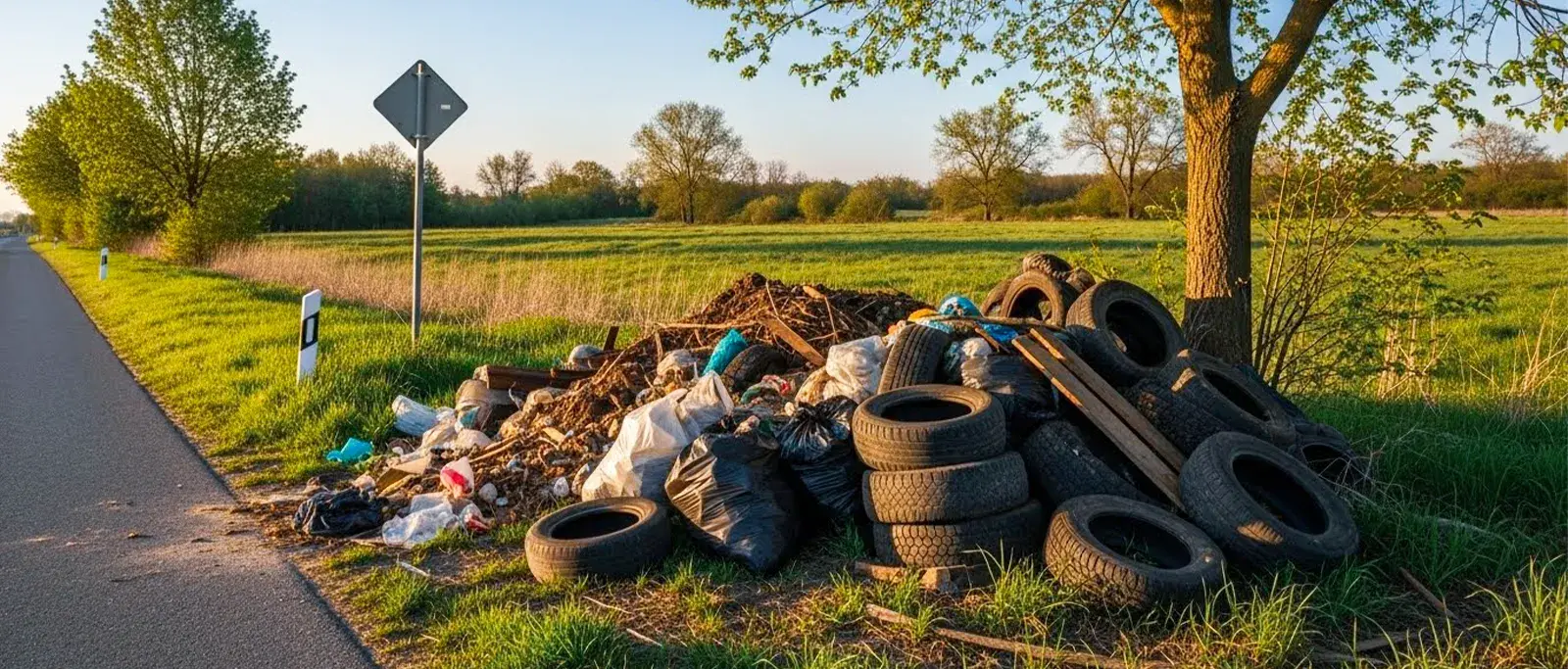
Illegal dumping or using an unlicensed hauler can result in fines and penalties under Florida Statute 403.717. The safest legal option for Central Florida residents and businesses is working with a licensed recycler like Ruben’s Tires Recycle.
5. Where can I find tire recycling drop-off locations near me in Central Florida?
Central Florida offers multiple tire drop-off options across Orange, Seminole, Osceola, Lake, and Volusia counties. County waste centers accept small quantities from residents, but many have limits, charge fees, or do not accept commercial loads.
For universal access without restrictions, Ruben’s Tires Recycle maintains an affordable, open-to-the-public drop-off site in Central Florida.
6. Is there affordable tire recycling for businesses in Orlando, FL?
Yes. Orlando businesses have access to affordable tire recycling options through licensed Florida tire collectors. Auto shops, fleets, construction companies, tow yards, and dealerships typically rely on Ruben’s Tires Recycle, which offers volume-based pricing, commercial rates, and scheduled weekly or bi-weekly pickups.
Florida businesses must use DEP-registered haulers, making licensed services both required and cost-effective.
7. What is the best tire recycling pickup service in Central Florida?
The best tire recycling pickup service in Central Florida is one that is fully licensed, provides fast turnaround, offers competitive rates, and meets all Florida DEP requirements. A top choice across Orlando, Kissimmee, Sanford, Winter Park, and surrounding areas is Ruben’s Tires Recycle, known for its reliable scheduling, compliant transport, and legal documentation for every scrap tire load.
Their DEP registration ensures all tires are recycled at approved Florida facilities, protecting customers from liability and fines.
8. Is there free tire recycling in Sanford, FL?
Free tire recycling in Sanford, FL is not commonly available year-round, but residents may find limited free disposal events offered through Seminole County Solid Waste or special community cleanup programs. These events typically restrict the number of tires per household and may require proof of residency.
Businesses in Sanford, however, are required to use licensed waste tire collectors and cannot rely on free services.
9. Is there tire recycling for auto shops in Winter Park, FL?
Yes, Winter Park has licensed tire recycling options specifically for auto shops, repair centers, tire retailers, and mobile mechanics. Because tire shops in Florida generate continuous waste tire volume, they must use a DEP-registered waste tire collector to stay compliant with state law. Ruben’s Tires Recycle provides Winter Park businesses with weekly or bi-weekly pickup routes, emergency cleanouts, and affordable pricing that works for shops of all sizes.
10. When is the next tire recycling event in Central Florida?
Central Florida counties periodically host tire recycling events, often during seasonal cleanup campaigns or community environmental initiatives. The dates vary by county, but events are commonly held by Orange County Solid Waste, Seminole County Solid Waste, and Osceola County Public Works. These events typically focus on residential tire disposal and may enforce quantity limits.
Want a real-world example of profitable, Florida-ready pricing?
Check Ruben’s Tires Recycle’s pricing model to understand how successful haulers structure their rates and maximize revenue.
Book a consultation with Ruben’s today to learn how to structure your own pricing for success.
Contact us now to get started.
Final Takeaway
Starting a tire recycling business in Florida is one of the most profitable, stable, and environmentally impactful opportunities in the state. With millions of tires generated each year and strict DEP laws requiring licensed haulers, the demand for reliable, legal scrap-tire collection is enormous.
By following Florida’s requirements, partnering with certified recyclers, investing in proper equipment, and building strong relationships with auto shops, fleets, and tow yards, you can create a business with high recurring revenue and long-term growth potential. Companies like Ruben’s Tires Recycle, one of Florida’s trusted DEP-registered haulers, show just how successful this industry can be.
If you’re ready to build a high-demand, low-competition, environmentally responsible business — Florida is the perfect place to begin.