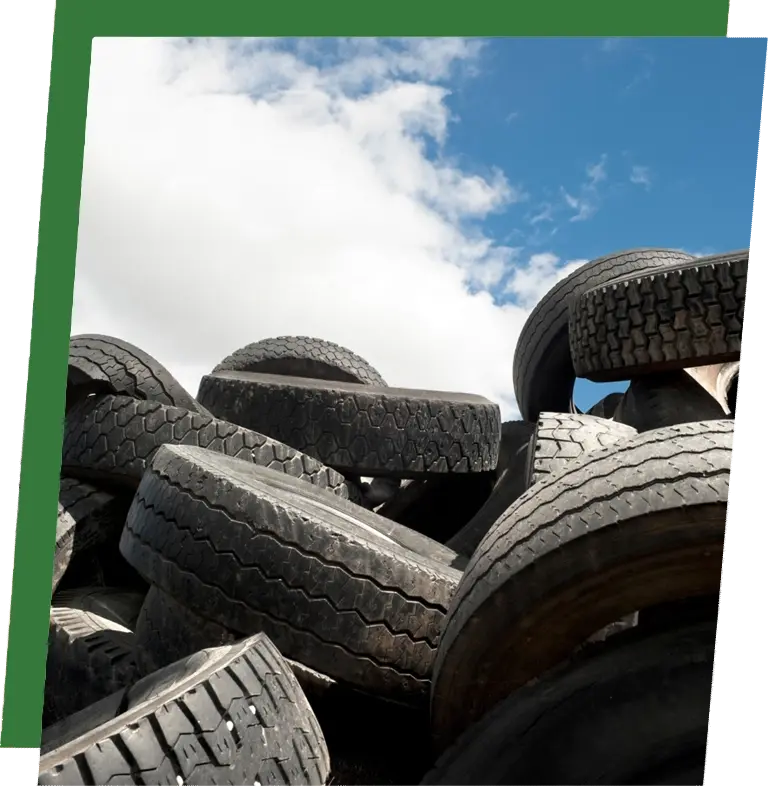
So can you just throw them out?
No. We get asked this at the counter most weeks, usually by somebody who found a stack of old tires behind a property they just bought. The answer doesn’t change with the story: in Florida you can’t put a waste tire in your regular garbage, and you can’t haul it to the curb. They have to be handled the right way, by someone who’s allowed to handle them.
The rules sit in Florida Statute 403.717, and the state spells out the day-to-day version on the FL DEP waste-tires page. None of it is complicated once you break it down.
The landfill ban
This is the part most people miss. Florida banned whole waste tires from its landfills. A tire that’s still in one piece can’t be buried with the rest of the trash, period. Shredded, it can be used — but the dump won’t take a whole one, and neither will the garbage truck that hauls to the dump.
There’s a real reason behind it. Whole tires don’t stay buried; they work their way back up to the surface, trap gas, and tear up landfill liners. Pile them above ground instead and you get the other problem — they catch fire and they hold standing water that breeds mosquitoes. So the state cut off the easy exit and pushed every tire toward recycling.
BannedWhole waste tires can’t go in a Florida landfill
Permitted onlyMust go to a permitted facility; haulers must be registered (FDEP)
25+/monthTriggers record-keeping under Statute 403.717
Permitted facility, registered hauler
If the landfill is off the table, where do they go? Two answers, and the law cares about both.
First, the destination: waste tires have to end up at a facility that’s permitted by the state to take them. That’s a place set up to shred them into fuel or grind them into rubber, not a back lot. We’re one of those facilities here in Apopka.
Second, the trip: anyone who hauls waste tires for hire has to be registered with FL DEP as a registered waste-tire collector. Registration is the state’s way of knowing who’s moving tires and making sure they’re actually delivering them where they say they are. We carry it — WACS #108814, bonded and insured. Hauling your own four tires to a facility yourself doesn’t make you a collector; paying someone to haul them does, and that someone needs to be registered.
The 25-tires-a-month rule — and who’s liable
One number trips up a lot of shops: 25. Once more than 25 waste tires move in a month, the law expects records. We’re talking date, count, the hauler’s registration number, and the driver’s name — a paper trail that proves the tires went to a permitted facility and didn’t end up in a ditch off County Road 435.
Here’s the part that catches people. The responsibility to keep those records sits with the business generating the tires, not just the truck driver. So if you run a shop, hand a load to a hauler who turns out not to be registered, and he dumps them somewhere — the trail leads back to you. Miss that, and the fine follows you, not the truck. That’s exactly why checking a hauler’s registration before you load is worth thirty seconds.
What it costs you if you get it wrong
Illegal dumping isn’t a slap on the wrist in Florida. Under 403.717 it’s a violation that can bring fines plus the cost of cleaning up the mess, and the more tires involved — or the more times it happens — the harder the state comes down. For a shop, an unregistered hauler is a quiet liability sitting on the books until the day it isn’t.
If you want to check the rules for our area specifically, or report a pile someone left behind, the Orange County solid-waste hotline is (407) 836-6601. They handle the local side of this.
How to stay on the right side of it
It’s honestly simple. If you’ve got a handful of tires, drop them off yourself at a permitted facility — bring them to us for $3 a tire, no appointment, rims on or off, and you’re done. If you run a shop, a dealership, or a fleet and you’re moving real volume, use a registered collector and keep the paperwork. We pick up across Orange and Seminole County, usually the same week, and the records come built in.
Either way the tire ends up where it should: shredded into fuel or ground into rubber for playgrounds and roads. The U.S. Tire Manufacturers Association puts roughly three-quarters of the country’s scrap tires into end-use markets like those rather than dumps. Following the law is just the part of that you can see from the counter.
Quick questions we hear
Can I put tires in my regular trash?
No. The landfill ban means curbside garbage isn’t legal disposal for a whole tire. Your hauler can’t take it to the dump, so it has to go to a permitted facility instead.
What if I just have 4 old tires?
The ban applies even to one tire, so you still can’t trash them. But four is well under the 25-a-month line that triggers hauler record-keeping, so the easy route is to drop them off yourself — for us that’s $3 each, no appointment.
Who’s liable if my hauler isn’t registered?
You are. The business generating the tires is responsible for using a registered collector and keeping records. If the hauler dumps them, the fine follows you, not the truck — so check the registration before you hand them over.
Is dumping tires a crime in Florida?
Illegal dumping is a violation under Statute 403.717, carrying fines and cleanup costs that scale with how many tires and how often. For specifics here, call the Orange County hotline at (407) 836-6601.